How to Tell If Your Garage Door Springs Are About to Break — Warning Signs Every Phoenix Homeowner Should Know
Your Garage Door Springs Are Trying to Tell You Something. Most Phoenix Homeowners Miss It Until It's Too Late.
It happens fast. One morning the garage door works perfectly. The next morning it doesn’t open at all — or it starts moving and stops with a grinding shudder that tells you immediately something is seriously wrong. You look up, see the spring assembly above the door, and notice a gap where there used to be a tight, continuous coil. The spring broke. Overnight. Without warning.
Except it did not happen without warning. The signs were there for weeks — sometimes months. They were subtle, easy to dismiss, and easy to confuse with the general sounds and quirks that every garage door develops over years of daily use. But they were there.
This post is a guide to reading those signs — understanding what your garage door is telling you before a spring failure turns a manageable maintenance situation into an emergency repair call on a Tuesday morning when you are already late for work.
First — Understanding What Garage Door Springs Actually Do
Before identifying the warning signs of spring failure it helps to understand what springs do and why their failure is such a significant event.
Your garage door — even a standard single car door — weighs between 130 and 200 pounds. A double car door can weigh 200 to 400 pounds or more depending on its construction and insulation. Moving that weight smoothly and reliably multiple times every day requires a counterbalancing system powerful enough to offset most of that weight so your opener motor is not bearing the full load alone.
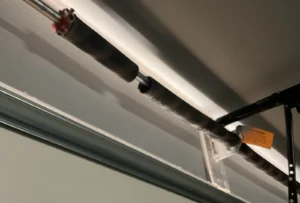
That counterbalancing system is your torsion spring. Mounted on a steel shaft above the door opening, the spring stores mechanical energy as the door closes — winding tighter with the weight of the descending door. When you open the door, that stored energy releases, effectively lifting most of the door’s weight so the opener only has to manage the remainder. A properly functioning spring makes a 200-pound door feel like it weighs 10 to 15 pounds to the opener motor.
When the spring fails, that counterbalancing force disappears instantly. The opener — designed to manage a fraction of the door’s weight — is suddenly asked to move the full 200 pounds alone. Most residential openers are not capable of doing this safely or reliably. The door either refuses to open, opens partially and strains, or in some cases opens erratically in ways that create a genuine safety risk.
Understanding this mechanism makes the warning signs much easier to recognize — because most of them are expressions of a spring that is gradually losing its ability to perform this counterbalancing function.
Warning Sign 1 — The Door Feels Heavy When Lifted Manually
This is the most reliable and easiest-to-test warning sign available to any homeowner regardless of mechanical experience.
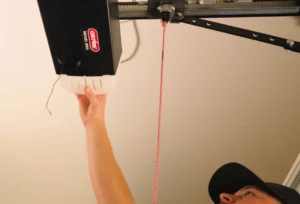
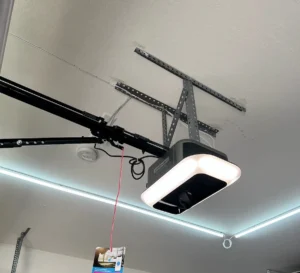
Here is how to perform the test. Locate the red emergency release cord hanging from the opener trolley in the center of your garage ceiling and pull it. This disconnects the door from the opener, allowing the door to move freely under manual control. With the opener disengaged, lift the door manually from the bottom to approximately waist height and then let go.
A door with healthy springs should feel nearly effortless to lift — significantly lighter than you would expect for something its size. And when you let go at waist height, it should stay there, hovering in place, held up by the counterbalancing force of the springs. If the door stays in position without drifting noticeably up or down, your spring balance is good.
If the door feels heavy — if it requires real effort to lift, if it feels like you are lifting its actual weight rather than a counterbalanced fraction of it — your springs are losing tension. This is the earliest and most actionable warning sign of impending spring failure.
If the door drops toward the floor when you release it at waist height, the springs have lost significant tension and professional assessment is needed promptly.
Important safety note: Never attempt to manually force a door open if you suspect a spring has already broken. A door with a failed spring has no counterbalancing force and can drop suddenly and with considerable force. If you suspect a broken spring, leave the door in its current position and call a professional.
Warning Sign 2 — Uneven Door Movement or Visible Tilting
A properly balanced garage door rises and lowers evenly on both sides simultaneously. The left side and right side of the door should move at exactly the same rate, maintaining a level, horizontal position throughout the full range of motion.
When a spring system begins to fail unevenly — which is common on double spring systems where one spring ages faster than the other — the door will begin to tilt or rise crookedly. The side served by the failing spring will lag behind or feel heavier, causing the door to appear as though one corner is lower than the other during operation.
This uneven movement is immediately visible if you watch the door carefully during a full open and close cycle. Even a subtle difference — two or three inches of tilt at full extension — is worth noting and having assessed professionally.
Left unaddressed, uneven spring tension does not just indicate a spring about to fail. It also places asymmetric stress on the <a href=”https://garagedoorgrunts.com/garage-door-repairs/garage-door-cable-replacement/”>lift cables</a>, the <a href=”https://garagedoorgrunts.com/garage-door-repairs/garage-door-track-replacement/”>tracks</a>, and the door panels themselves — potentially creating damage that extends well beyond the spring system.
Warning Sign 3 — The Opener Is Straining or Unusually Loud
Your garage door opener is a motor. Like any motor, it performs best when operating within its designed load range. When springs begin to lose tension and provide less counterbalancing force, the opener motor is asked to work harder to compensate. This increased load manifests in several ways that homeowners can detect.
The door opens more slowly than it used to. The opener motor sounds louder or more strained during the opening cycle. The door hesitates at the beginning of the opening movement before the motor builds enough torque to get it moving. In some cases the opener’s built-in overload protection triggers and the door reverses or stops partway through opening.
If your opener has been performing noticeably differently than it used to — slower, louder, less smooth — and you have ruled out other common causes like needing lubrication or sensor misalignment, the spring system is worth having assessed. Continuing to run an opener against a failing spring system is one of the most common causes of premature <a href=”https://garagedoorgrunts.com/garage-door-openers/garage-door-opener-repair/”>opener failure</a> in Phoenix area homes.
Warning Sign 4 — Visible Gaps or Separation in the Spring Coils
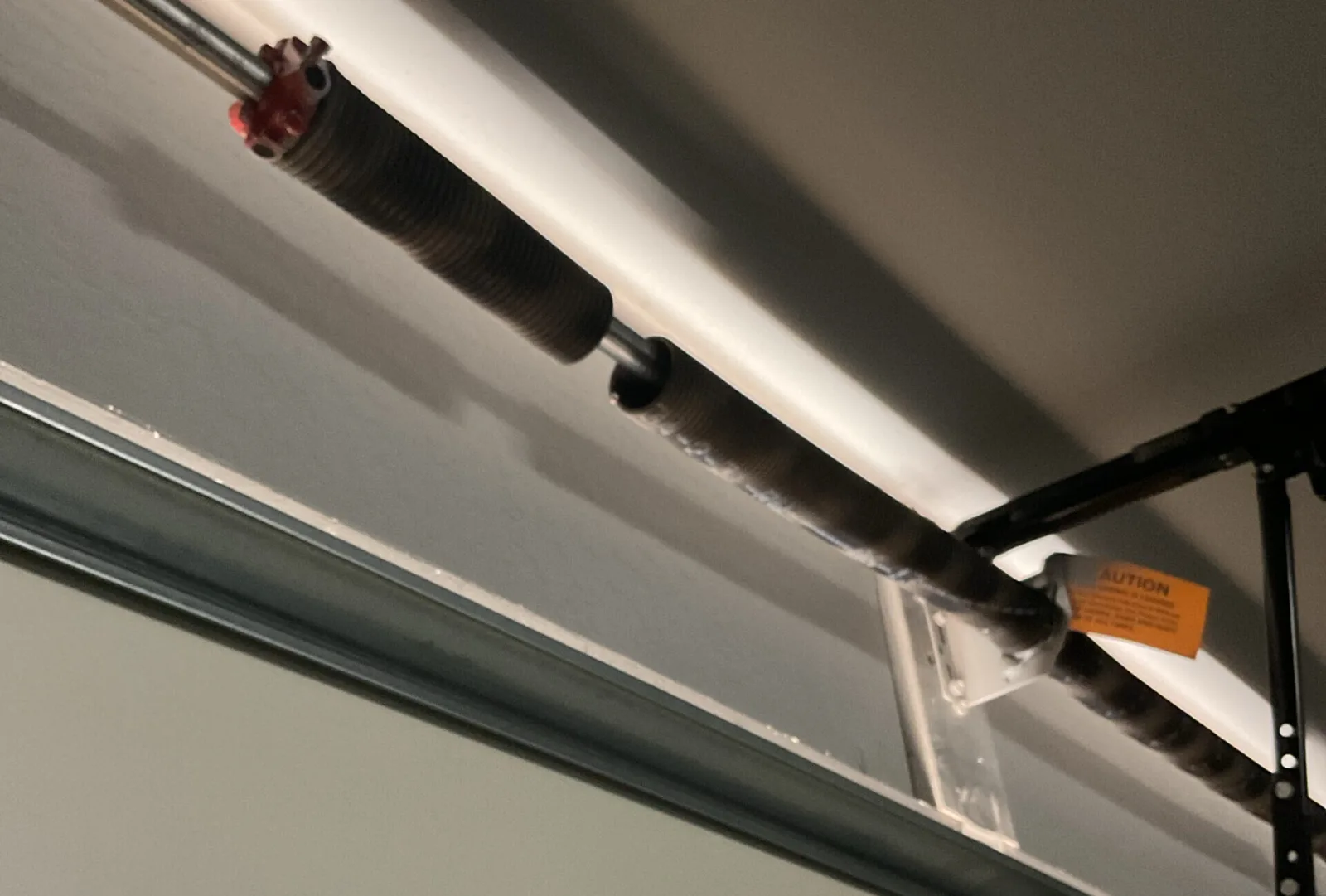
Stand in your garage and look at the torsion spring mounted on the shaft above the door. A healthy spring looks like a tight, continuous coil of metal wire with no visible gaps between adjacent coils across its entire length.
A broken or severely fatigued spring will show a visible gap — a section where the coils have separated, leaving a space of an inch or more between the coil ends. This is the clearest possible visual indication of a failed spring. If you can see a gap, the spring has already broken. The door should not be operated until the spring is replaced.
Beyond a complete break, look for sections of the spring where the coil spacing appears uneven — tighter in some sections and more open in others. This uneven tension distribution can indicate a spring that has partially fatigued and may be approaching failure even though it has not yet broken completely.
Warning Sign 5 — Unusual Sounds From the Spring Area
Garage door springs make sound during operation — primarily the soft metallic whisper of coils moving against each other as the spring winds and unwinds. This is normal. What is not normal are sounds that suggest mechanical stress, corrosion, or structural compromise in the spring itself.
A creaking or groaning sound from the spring area during operation often indicates inadequate lubrication combined with surface corrosion — the coils are binding against each other with friction rather than moving freely. This condition both accelerates fatigue and indicates a spring that has not been properly maintained.
A sharp popping or clicking sound from the spring during operation can indicate a coil that is deforming under stress. This is a more serious sound that warrants prompt professional attention.
A sudden, extremely loud crack or bang — often compared to a gunshot — is the sound of a torsion spring failing catastrophically. If you hear this sound, the spring has broken. The door should not be operated and a professional should be called immediately at (623) 219-8460
Warning Sign 6 — The Door Falls Too Fast When Closing
A properly counterbalanced door descends slowly and under control when closing. The spring tension that makes the door easy to open also acts as a brake on the way down — preventing the door from free-falling under its own weight.
When spring tension is insufficient, the door descends faster than it should — sometimes dramatically faster in advanced spring failure. If your door closes with a noticeable thud at the bottom, or if it seems to drop rather than descend smoothly, the springs are not providing adequate counterbalance in the closing direction.
This symptom is also a safety concern independent of the spring failure risk. A door that descends with insufficient control is a potential hazard to people, pets, and vehicles in its path.
What to Do When You Notice These Signs
The appropriate response to any of these warning signs is a professional assessment — not continued operation and hoping the spring holds on a little longer.
Here is why timing matters. A spring that is identified as approaching failure during a routine inspection can be replaced on a scheduled basis, during normal business hours, at standard pricing, with the vehicle safely outside the garage during the repair. A spring that fails without warning often does so at the worst possible moment — creating an emergency that adds unnecessary stress to an already inconvenient situation.
Additionally a spring that has been running in a compromised state for an extended period may have placed additional wear stress on the cables, rollers , drums — making a complete system assessment at the time of spring replacement particularly valuable.
Our garage door spring replacement is $395 installed for a standard double-spring job — flat rate, parts and labor included, backed by a 2-year guarantee. For a complete system rebuild that addresses the spring and every other critical moving component simultaneously, our garage door repairs GDG Signature Moving Parts Kit runs $1,395 to $2,395 depending on door configuration and warranty tier selected.
Financing is available on qualifying projects starting at $500.
Schedule a Spring Inspection
If you have noticed any of the warning signs described in this post — or if your door is more than five years old and has never been professionally inspected — a spring assessment is the most proactive and cost-effective step you can take today.
We serve homeowners across Surprise, Peoria, Glendale, Goodyear, Buckeye, Scottsdale, Anthem, Sun City, and throughout the greater Phoenix Valley. Phones are answered 24 hours a day, 7 days a week.
Schedule Service Today or call directly (623) 219-8460. Flat rate pricing. Veteran owned. No surprises.