
Anthem · June 2026
Door reversing on its own
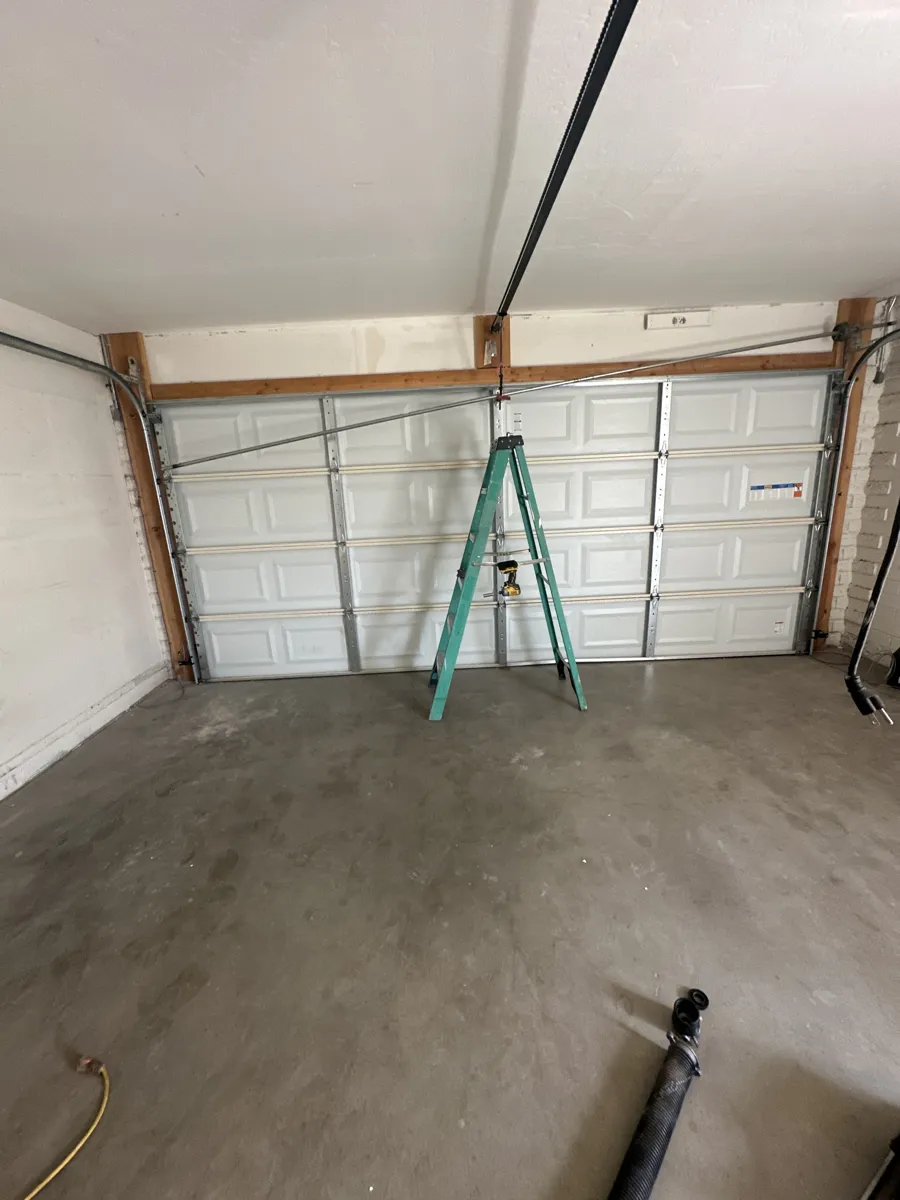
The door went up and came straight back down. A spring had broken and the lift cables were kinked; the rest of the hardware was original from 1999, so we replaced the worn bearings and drums too.


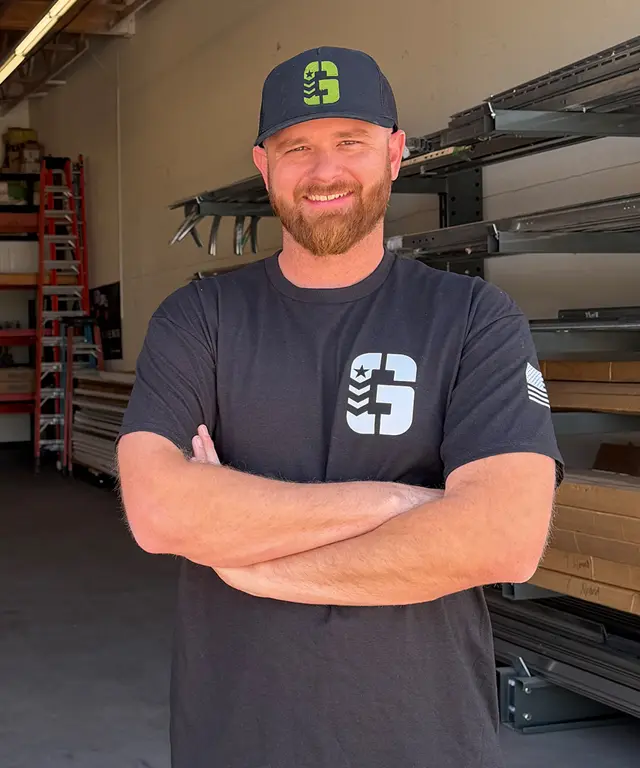 By Kyle Ronan, owner of Garage Door Grunts · Marine veteran · about 10 years as a garage door tech · Updated October 2026
It isn’t only a summer problem. We replace broken springs all year, including plenty in January. A spring fails when it runs out of cycles, and a tired spring can go in any season.
Cycles first. Every spring is rated for a number of cycles, one open and one close. A standard torsion spring is rated for about 10,000. Open and close the door six times a day and that’s four or five years.
Then heat and dust. Summer heat dries out the lubricant on the coils, and monsoon dust works in like grinding paste. Neither breaks a good spring on its own, but both move the failure date forward. In Avondale we replaced springs on a door that hadn’t been serviced in 10 to 15 years, and the dry hinges, rollers and bearings had worn just as hard.
Builder-grade springs. New homes often come with the cheapest springs that fit. In Litchfield Park we replaced a broken spring on a three-year-old door whose opener counter showed fewer than 10,000 cycles.
Wrong size from the start. In Waddell both springs were intact but the door weighed 50 pounds on the scale, because the 9-year-old springs had been the wrong size all along. Correctly sized springs fixed it.
Torsion springs sit on a steel bar above the door and twist to lift it. Most Valley homes have these. Extension springs run along the tracks on each side and stretch as the door closes; they are common on older or lighter doors. Wayne Dalton TorqueMaster doors hide the springs inside the tube above the door, so a standard swap doesn’t fit; we convert those to standard torsion.
The systems aren’t interchangeable, and the spring has to match your door’s weight and height. A tech can tell which you have in about thirty seconds. On heavy doors, ours put the door on a scale and size the spring to its exact weight.
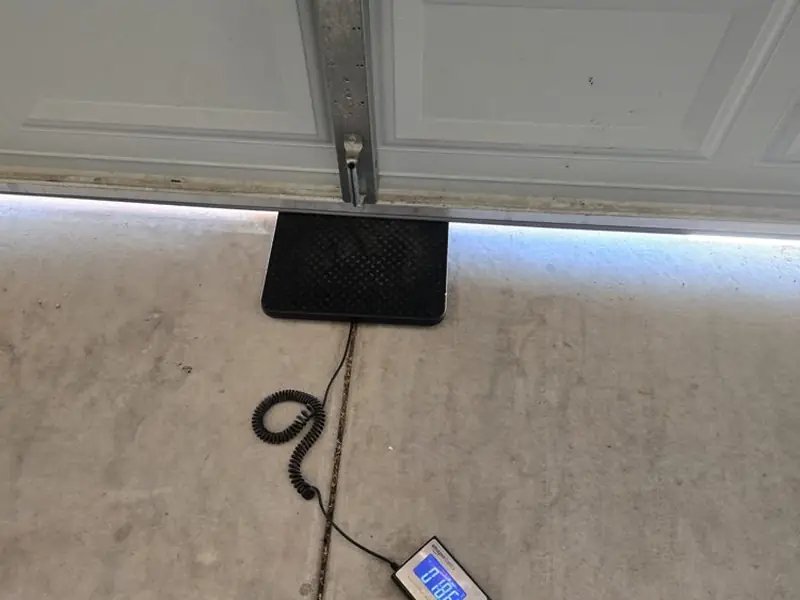
Springs lose strength long before they snap. This test tells you where yours stand:
5 lb or less: healthy springs. More than 5 lb: the springs are tired and the opener is doing their job. Replace them now and you save the opener. Reconnect the opener afterward by running it until the trolley clicks back in.
We’d tell a friend the same thing: don’t. A wound torsion spring stores a lot of energy, and if a winding bar slips it comes off fast and at head height. Springs also come in different wire sizes, inside diameters and lengths; the wrong one throws the door out of balance even when the install goes smoothly, and that shortens the opener’s life. It’s one of the few garage door jobs we always leave to a trained tech with proper winding bars.
| Garage Door Grunts price (both springs, installed) | Price |
|---|---|
| Standard springs, 2-year guarantee | $395 |
| 5-year warranty springs | $595 |
| 10-year warranty springs | $895 |
| Wayne Dalton TorqueMaster to standard torsion (standard double-car door, labor included, 2-year guarantee) | $895 |
| Visit, tune-up and safety inspection (waived when you approve a repair) | $49.95 |
There’s $80 off high-cycle springs with a 5-year or longer warranty, and after-hours dispatch (after 6 pm, Monday to Saturday) is a flat $250 plus the repair. If something else is worn, like the lift cables, you see it and its price in writing before anything is done. See every price we charge.
The door went up and came straight back down. A spring had broken and the lift cables were kinked; the rest of the hardware was original from 1999, so we replaced the worn bearings and drums too.
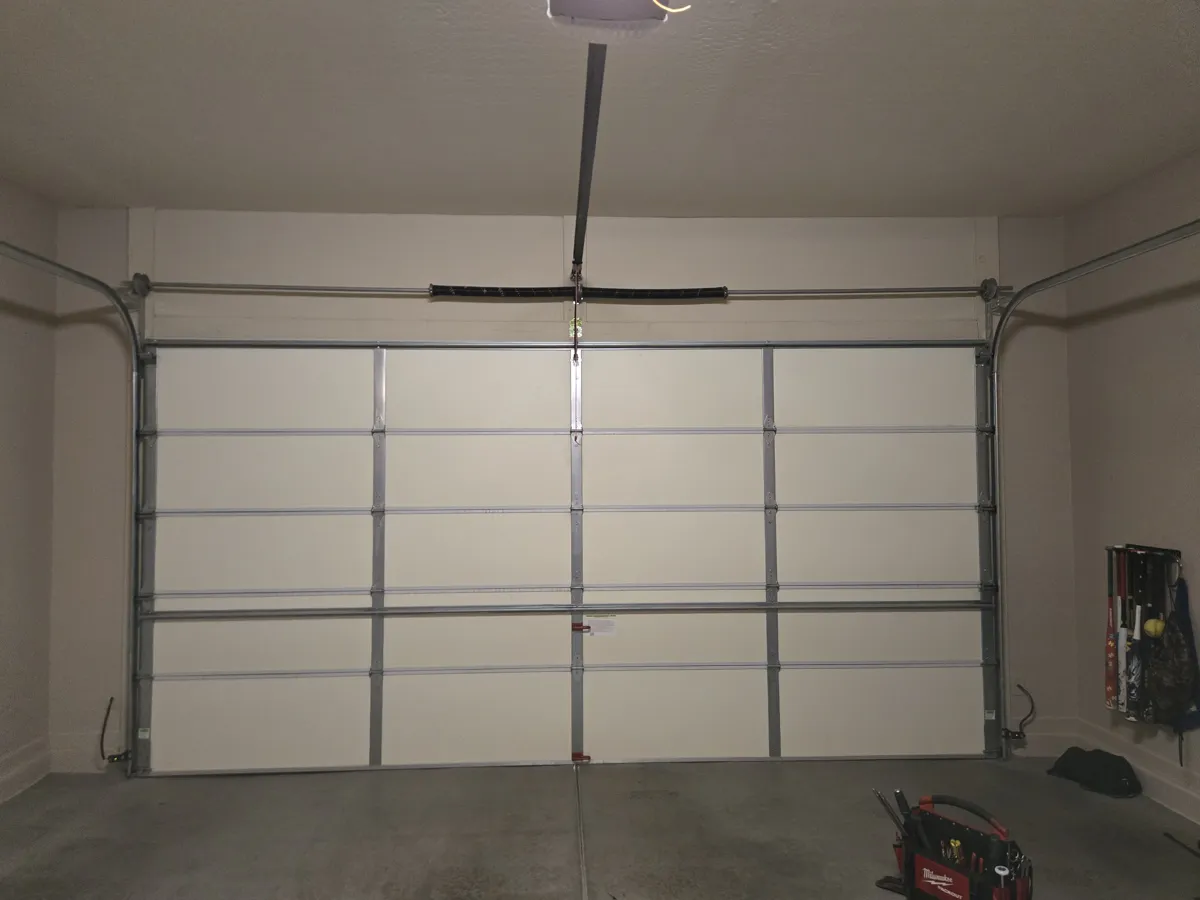
The door had been loud and rough for about a month before the homeowner spotted the broken spring. Running on one spring had already worn the opener’s drive sprocket.

A spring finally broke on a door that hadn’t been serviced in at least a decade. We installed 5-year springs and lubricated the whole door.
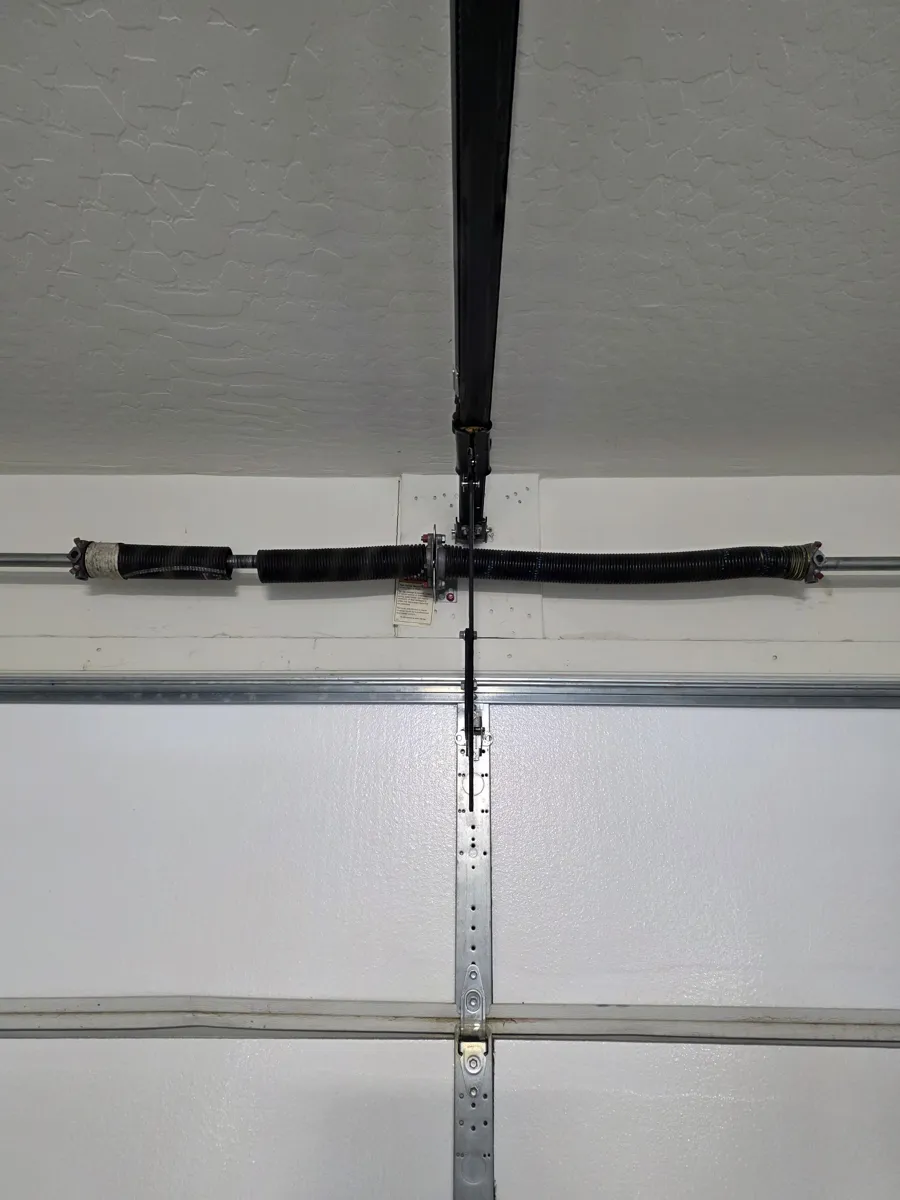
A broken spring and a cable off one side. The opener had logged about 4,300 cycles in its first year, so the homeowner chose high-cycle springs and cables.
More on our garage door spring replacement page, including a map of every spring job we’ve done this year.
At Garage Door Grunts, replacing both springs is $395 installed with a 2-year guarantee. Springs with a 5-year warranty are $595 and with a 10-year warranty are $895, installed. The $49.95 visit is waived when you approve the repair. See all our prices.
Standard torsion springs are rated for about 10,000 cycles (one open and one close). A family using the door six times a day reaches that in four or five years. Higher-cycle springs last longer, which is why most of our customers choose them.
Yes. The other spring is the same age with the same number of cycles, so it is usually close behind. Replacing the pair costs less than two visits and keeps the door lifting evenly.
Not with the opener. The spring carries the weight, and the opener can strip its gears or bend the door. If you must get a car out, pull the red release cord and lift slowly by hand with two people, then call for repair.
We strongly advise against it. A wound torsion spring stores enough energy to cause serious injury if a winding bar slips, and the wrong spring size throws the door out of balance and wears out the opener.
Mostly cycles: every spring wears out with use. Heat dries out lubrication and dust works into the coils, which speeds that wear. They break in every season, not just summer.
Do the balance test: with the door closed, pull the release cord, set a bathroom scale under the middle of the door and lower it onto the scale. 5 lb or less is healthy. More than that means the springs are tired and the opener is doing their work.
Some Wayne Dalton doors keep the springs inside the tube above the door, so a standard spring swap does not fit. We convert them to standard torsion for $895 on a standard double-car door, labor included, with a 2-year guarantee.
Usually about an hour once the tech is on site, and most are done the same day you call.
Phones answered 24/7. Both springs, $395 installed, 2-year guarantee.
Our techs repair and install all of this across the Phoenix Valley. Prices are on our pricing page, and phones are answered 24/7 at (623) 219-8460.
Kyle comes from a family with more than 20 years in the garage door industry and has about 10 years of his own as a service technician and installer, on residential and commercial doors. Before that he served eight years in the United States Marine Corps (2009–2017), including Operations Iraqi Freedom, Enduring Freedom and Freedom’s Sentinel. He has worked for big-name companies in the industry and holds two Arizona ROC dual licenses (residential and commercial): #333915 (CR-60) for garage doors and #364504 (CR-14) for gates. He started Garage Door Grunts in North Phoenix because he’s seen service from every side, and he knows what it should look like. We’re here to stay. About Garage Door Grunts.